
In our Airstream, home is where we park it, and its carbon footprint is smaller than our sticks-n-bricks lifestyle ever was.
I started thinking about this when a rather irascible viewer left a spiteful comment on a YouTube video we made in New Mexico, in which Jessi referenced —a bit tongue-in-cheek—the overhunting of elk and the heavy logging by previous generations. (I’m leaving the typos as I found them, because I think it shows how angrily they were typing.)
You complain about killing “all” the elk and cutting the trees but you are there pulling an airstream. You leave a carbon footprint the size of king Kong and expect everyone’s else to rough it all while you spoil yourselves at our expense. Get a life
Despite this person needing to learn to enjoy their own life rather than berating others, I did take their comment into consideration. It turns out they’re quite wrong about our impact on the environment compared to how we used to live. Instead of King Kong, I think we’re more like Mighty Mouse.
Small Space, Big Savings
The most immediate difference is housing energy. A traditional 2,000-square-foot home is a massive volume of air to heat and cool. In an Airstream, we are managing about 10 percent of that space. We can keep our entire living space warm in the winter using a fraction of the energy a household furnace would require.
And in the summer, we can cool our space much more efficiently with air conditioning. Although we rarely use our air conditioning in the Airstream, so we win that argument even more. The cross-breeze available to us in the Airstream has allowed us to camp in west Texas in 105-degree daytime temps without running the A/C. There is simply no way we could keep our sticks-n-bricks cool enough to do that with airflow alone. By shrinking our household footprint, we’ve slashed the energy needed to stay comfortable.
The Minimalism Multiplier
When you live in a house, you have closets, a garage, and a basement to fill with “stuff.” Every item manufactured has a carbon cost. In the Airstream, if we buy something new, something old usually has to leave. This forced minimalism drastically reduces our consumption footprint. We buy less, waste less, and are much more intentional about every product we bring on board.
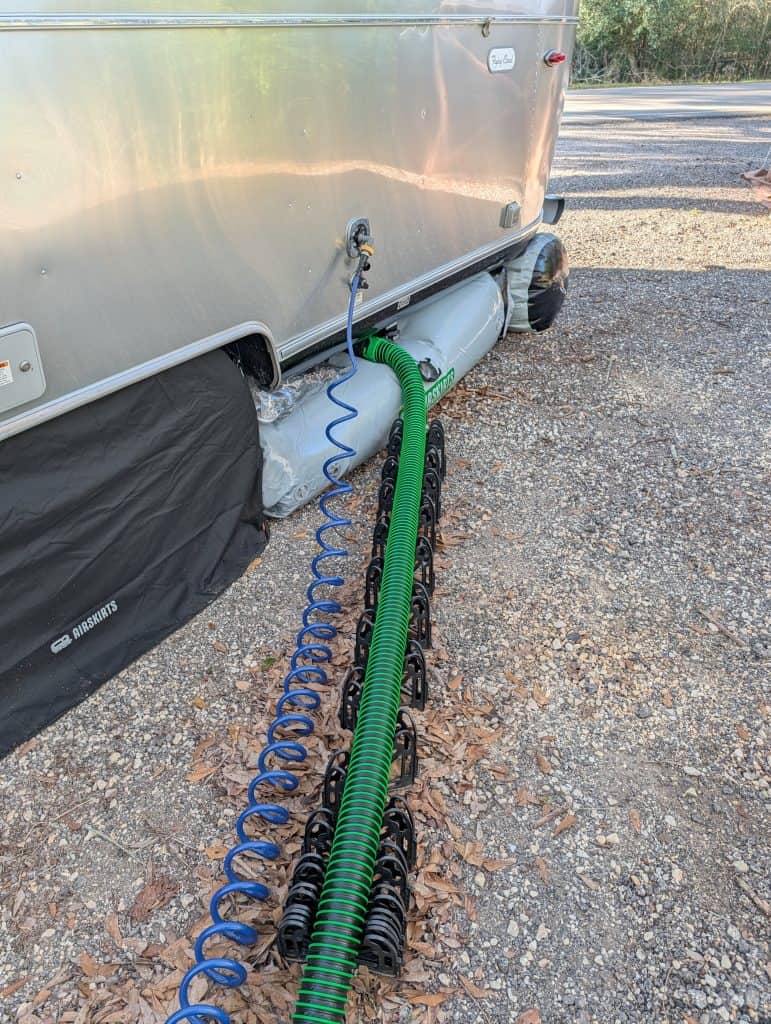
We also are constantly monitoring our freshwater and wastewater usage. I can think of no time when we ever did that in a house. And I would guess the percentage of house dwellers who do that is incredibly low. In a house, you turn on a faucet or flush the toilet, and fresh water just appears and wastewater disappears, never to be thought of again. That’s not the case in our RV. We have to monitor both closely, which has led us to use much less water.
I’ve written before about how RVers could teach homeowners a lot about conservation. I included some things to consider if you want to be a more conscientious house dweller.
The Commuting Conundrum
“Commuting” is where the nomadic lifestyle faces its biggest challenge. While a traditional homeowner might drive to an office in a fuel-efficient car, we often tow 8,000-plus pounds with a heavy-duty van. However, our daily “commute” to work is usually just a few steps through the RV. For a digital nomad in an RV, the elimination of the daily office commute can often offset the fuel burned during “move days.” That’s especially true if you travel slowly and stay in one spot for weeks at a time.
On top of that, if you commute to an office, you’re now in a building consuming massive amounts of electricity through overhead lighting, enormous HVAC systems, and more.
By serving as volunteer park hosts at state parks, we often are stationary for several months at a time. That means the commuting offset is multiplied exponentially. Any travel we do while parkhosting is done in just the van, which gets much better gas mileage when it’s not towing our house.
You can download our free Parkhosting 101 Guide here.
In addition, by being RV nomads, we have, for the most part, eliminated “vacation trips.” If you’re taking vacation time away from an office or your sticks-n-bricks neighborhood, you’re often using air travel, which has a much higher impact on the environment than any trips we take, even when towing the RV.
Is RV Living “Greener”?
Whether being a nomadic RVer is “greener” depends on a lot of factors because not every RVer is as environmentally conscious as we are when traveling.
As I mentioned, we park for months at a time, significantly reducing our fuel use, tire wear, and use of public roadways, etc.
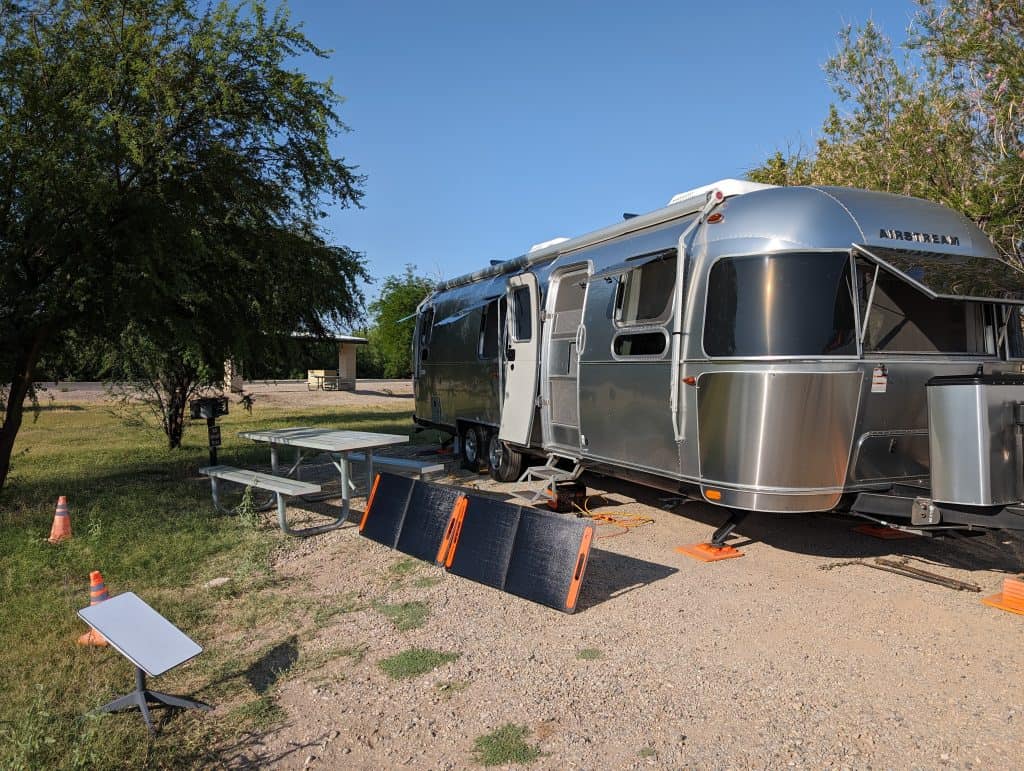
The electric use in a sticks-n-bricks home is phenomenally greater than in our RV to begin with. But we also have embraced solar power on our rig. That means when we are on the move, we are less likely to plug into power pedestals and therefore don’t consume any electricity.
And our water usage is much lower in our Airstream than it has ever been in a house. That’s what happens when you need to think about every gallon going in and out of your home.
The RV lifestyle can be significantly lighter on the planet than a traditional suburban life. But it all depends on how you choose to live and use up our planet’s resources, plus doing what you can to encourage better stewardship for yourself and others.