
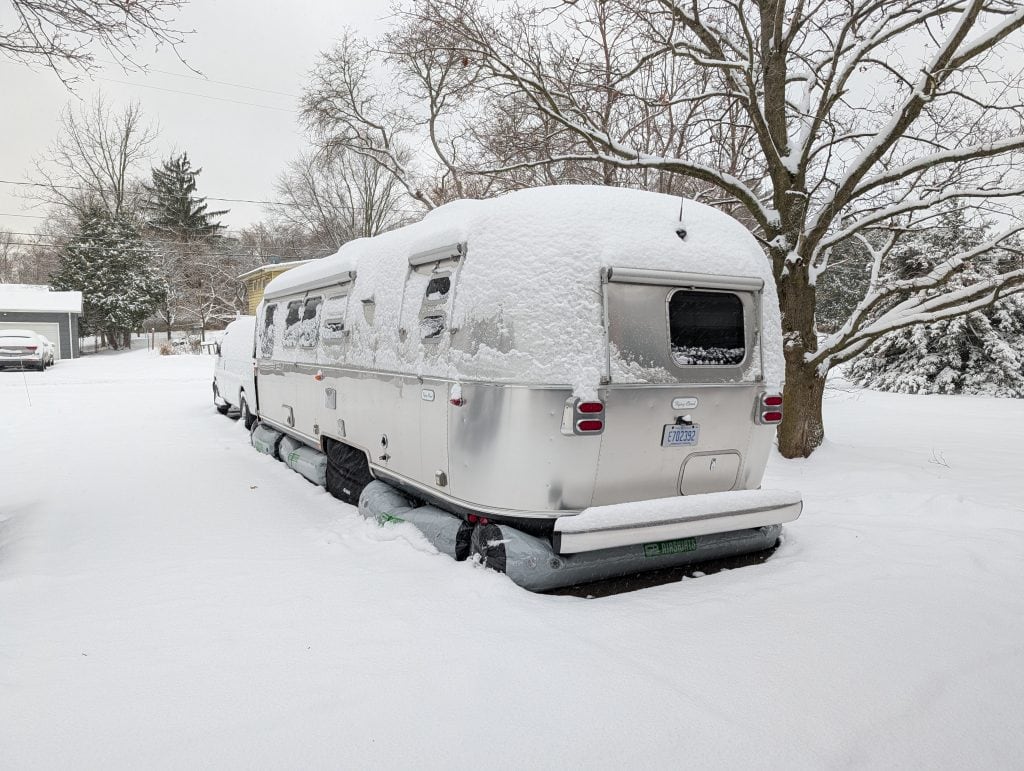
From the blowing snow of a Michigan winter to the unexpected freezing plunges in south Texas, we’ve spent several months testing a combination that really works to keep the cold at bay for RVs: the AirSkirts inflatable RV skirting and Xtreme Heaters.
The Heat: Xtreme Heaters
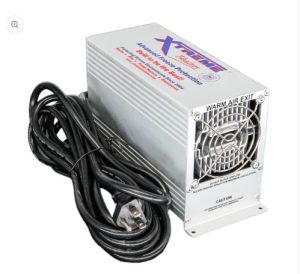
When we were in Michigan, our 800-watt Xtreme Heater was running almost nonstop. These things are built tough—designed to military specs and fully sealed from the elements. We used one 800-watt unit under our 30-foot Airstream, and it did a great job. If you have a larger rig, you might want two. Or perhaps a smaller 400- or 600-watt unit specifically for your wet bay. The peace of mind is huge—I even felt comfortable leaving it unattended while we went away on weekends.
In Texas, the weather and temperatures can fluctuate significantly from day to day and even hour to hour. One of the best features of an Xtreme Heater really shines in that case. It has a built-in thermostat that activates the unit at 40°F and deactivates it at around 55°F. You don’t have to think about it once it’s set up.
The unit has performed flawlessly, turning on and off as expected based on temperature. While still in Michigan, we ran this thing nonstop for nearly 2 months, and it never blinked at the demand. These aren’t cheap, but there’s a reason: you get what you pay for. If you want a quality unit that does what it’s supposed to do, and you don’t have to worry about it catching on fire or blowing up your rig, drop this in your cart and stop worrying about a few hundred dollars to protect an investment worth tens of thousands.
Why we like Xtreme Heaters:
- 5-year manufacturer’s warranty with a lifetime guarantee. Units will be serviced in-house, and if the heater can’t be repaired, a new one is available at 50% off.
- Xtreme had to pass Coast Guard ignition protection. Everything inside the heater is protected from all outside elements. The units are IP68 rated. (Can even be used in salty air without worrying about corrosion.)
- The electronics that run the heater are built to medical standards, meaning they have built-in redundancies.
- Each unit is tested 3 times during the production stages
- The units are very versatile. They are small and can be mounted in any direction. They provide a gentle heat to keep things from freezing, but the exterior of the heater does not get hot.
The Insulation: AirSkirts Inflatable Skirting
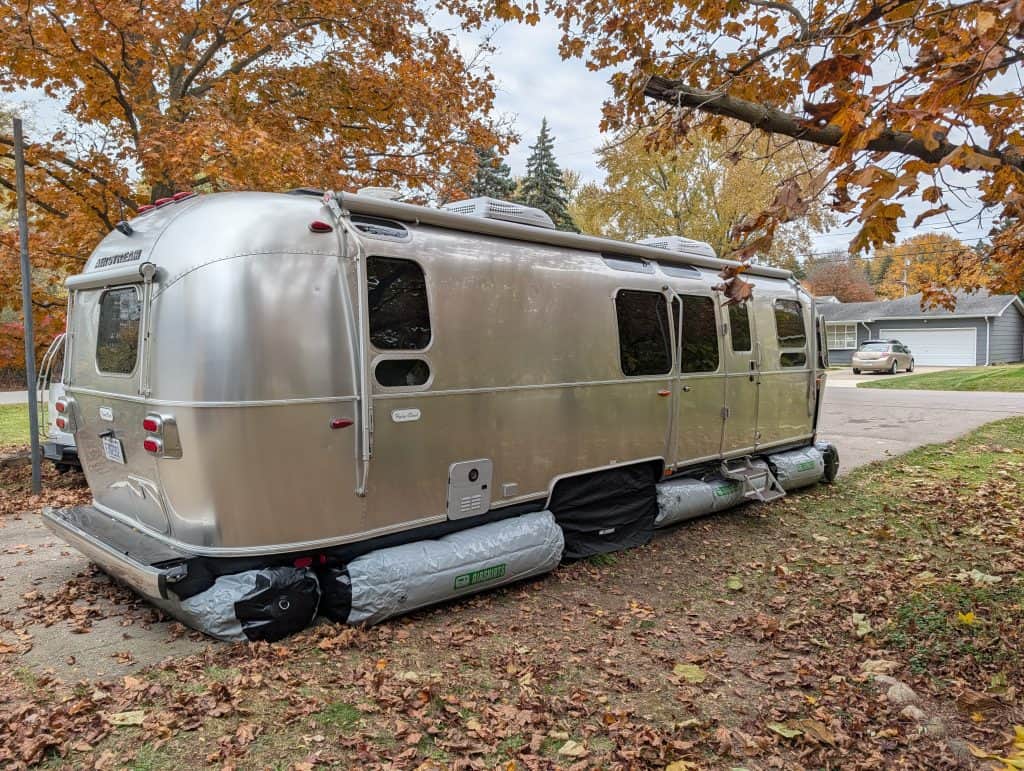
A heater can only do so much if the wind is whipping right under your rig. That’s where the AirSkirts come in. Traditional skirting that requires drilling holes or using snaps. AirSkirts are heavy-duty, military-grade inflatable bags that you just pump up until they make a snug seal against your rig.
Why we like the AirSkirts:
- No Modifications: No snaps, no tape, and no drilling into your RV.
- Quick Setup: You just put them in place and pump them up with the included powerful air pump. (It also works great as a deflator at the end of the season.)
- Durability: Ours have been on asphalt and gravel with zero issues or leaks.
- Easy Storage: When it’s time to roll, you deflate them. Then they fold up to store in their bags or can lie flat in an RV storage bay. They’re tough enough to use as a base layer, then store other stuff on top.
The Results: A “Ready to Roll” Rig
The real magic happened when we combined the two systems. We used the AirSkirts to create a “compartment” under the rig. The Xtreme Heater warmed that area. So, we kept everything thawed while we were parked in Michigan. No frozen shocks or stuck brakes; no winter slop underneath the Airstream.
In Texas, we’ve dealt with nights cold enough that our heat pumps couldn’t run. And our small electric heater can’t keep up at that point. In the past, we’ve had to run our propane furnace to stay warm. Since using this combo, we haven’t run the furnace once—saving on propane costs.
Important Things to Note
- Air pressure fluctuations: Air pressure in the AirSkirts changes with the temperature. In Texas, the mercury can fluctuate by 30 degrees in a day. We had to release a small amount of air from the AirSkirts in the afternoon to prevent overinflation. Then we’d add it back at night to seal things up. That’s not a big deal, since the included air pump is quick and easy to use. But they aren’t set-it-and-forget-it when you’re dealing with big temperature swings, so be aware of that.
- Not a replacement for winterizing: If you aren’t living in the rig, you still need to protect the pipes above the floor level. Xtreme Heaters are a great supplement. But they don’t replace standard winterizing for storage because they aren’t heating the pipes and systems throughout your entire rig.
AirSkirts are definitely an investment, and Xtreme Heaters aren’t cheap. But if you want to enjoy your RV year-round and keep it protected, this combo is hard to beat. When you think about how much you’ve spent on your RV, the investment for AirSkirts and Xtreme Heaters to help you stay in the rig longer and, perhaps, year-round, makes a lot more sense.
If you’re interested in AirSkirts, use our affiliate link — www.trekers.org/airskirts — plus the code TREKERS at checkout to save $100!
Watch for an upcoming YouTube video diving into the details on the highlights we covered in this blog post.