

In 1860, Sacramento’s Daily Bee captured the weight and romance of the Pony Express, noting a rider “prides in conveying on his willing back, week by week, the world’s current history.” It is a striking idea. Those young men carried bags full of paper, including letters that mapped out the ambitions and realities of daily life being shared with others. But when I look at our modern wonders of communication, I can’t help but question where our “current history” will end up.
When our daughters were in school in Michigan, they were not taught cursive handwriting. Like so many of their peers, they cannot read the cards and letters their grandparents sent them in cursive. The unique slant of a grandparent’s handwriting has become an unreadable cipher to many. Abandoning cursive in our schools does more than make old letters hard to read; it discourages writing them and slowly severs a deeply human connection across generations.
But the shift away from cursive is just a symptom of a much larger, quieter loss. We don’t write letters anymore. We text. We email. We drop fleeting thoughts into a digital journal. We seem to be trading the tactile, grounded slowness of paper notebooks for the searchable convenience of digital journaling apps. While digital platforms offer encryption and automatic cloud backups, a server on the other side of the country doesn’t carry the emotional weight of a loved one’s journal after they have died. Or a typed letter, printed and folded into a box for safekeeping, that helps you understand your parents or grandparents a little better.
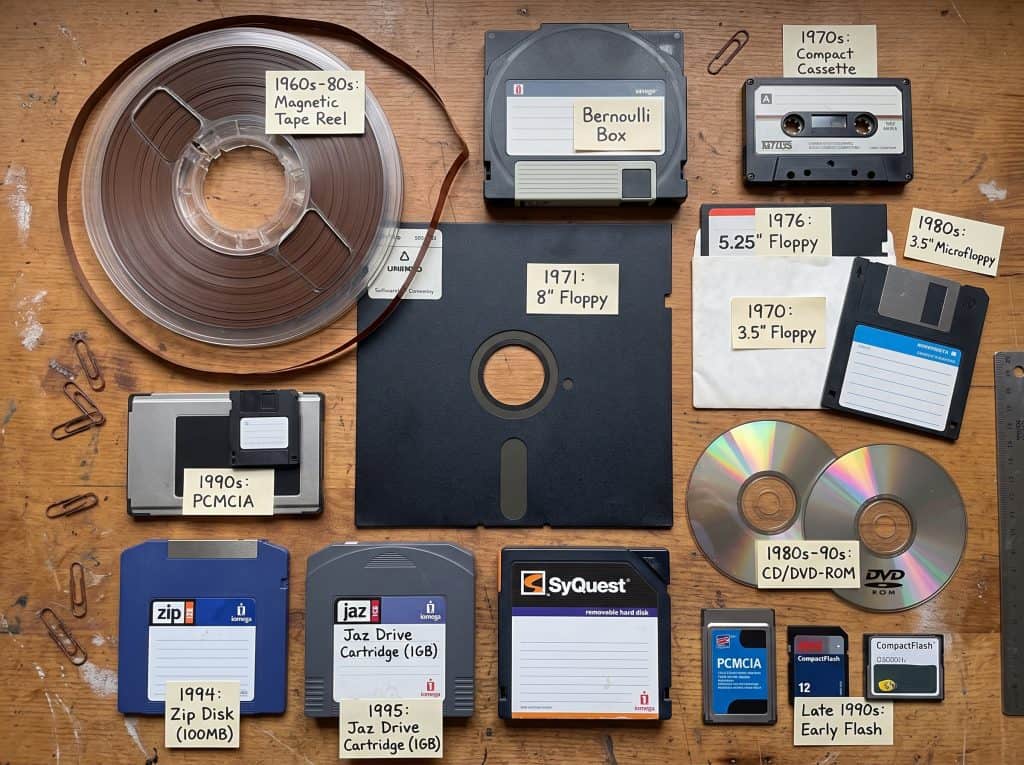
Sure, digital records can last a long time, but how will we read them? As a member of Gen X, I have seen 5.25-inch floppy disks, 3.5-inch floppy disks, tape drives, ZIP disks, recordable CDs/DVDs, and flash drives that fit in the palm of your hand. They were all heralded as the medium to keep things safe and preserved. But today, even if you can lay your hands on one, what devices do you own that will read them? On the other hand, my parents’ letters, written well before I was born, along with the pictures that accompany them, are tucked away in a safe, waiting for me to review anytime I want without any technology (except maybe a light bulb).
In the future, how will people learn what their grandparents and great-grandparents did if there’s no written record on paper?
Are we losing the ability to capture our “current history”? Are we so focused on capturing ideas and information electronically because it’s easier that, in the end, we’re losing the permanent recording of history? Despite the mass amounts of information and the speed at which it can currently be shared, will future generations have less information instead of more?
A hard drive is easily wiped, corrupted, or locked behind forgotten passwords. A text thread is quickly buried and discarded with our next phone upgrade. But a letter, written by hand, folded into an envelope, and tucked into a desk drawer, waits patiently to be discovered. If we abandon the physical page for the convenience of the screen, we might erase ourselves from the stories our descendants will try to tell.
So, how are you preserving your own “current history?”
-Ari
Like what you’re reading? How about buying us a cup of coffee? — buymeacoffee.com/trekers